Home
Home
How Poll Everywhere Is Changing Live Presentations and Classrooms Right Now

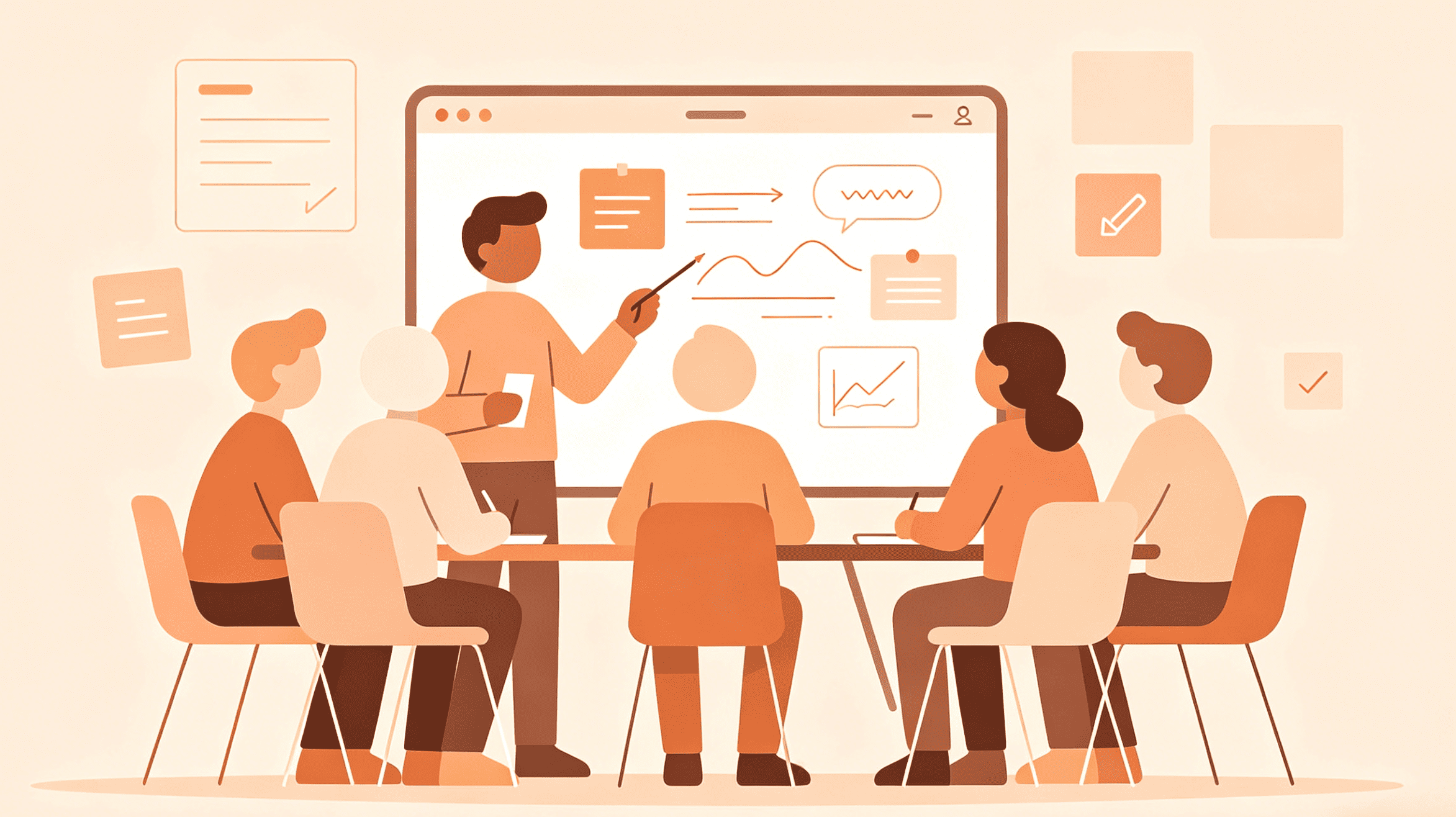
Communication dynamics in 2026 have shifted significantly toward hybrid models where engagement is no longer a luxury but a requirement for retention. Static slides and one-way monologues often fail to capture the attention of audiences accustomed to instant interaction. This is where Poll Everywhere functions as a bridge, transforming passive observers into active participants. By utilizing the devices already in people's pockets, this web-based audience response system eliminates the need for proprietary hardware while expanding the possibilities for real-time data collection.
The Evolution from Clickers to BYOD
For years, educational institutions and corporate training departments relied on physical "clickers." These handheld devices were effective but came with significant overhead: battery management, distribution logistics, and the inevitable replacement costs when units went missing. The transition to a Bring Your Own Device (BYOD) model represents a fundamental shift in presentation technology.
Poll Everywhere leverages the omnipresence of smartphones and laptops. Instead of managing a fleet of plastic clickers, presenters provide a URL or a text-to-join code. This approach recognizes that a mobile phone is now an extension of personal identity. Statistics suggest that students and employees are far less likely to forget or lose their personal phone compared to a borrowed clicker. Furthermore, the BYOD model naturally discourages proxy attendance. While a student might carry several clickers to class to log attendance for absent friends, they are unlikely to possess multiple personal smartphones containing private data and biometric locks.
Core Interaction Types and Their Strategic Use
Engagement is not a monolithic concept; it requires different formats depending on the goal of the session. The versatility of interaction types within the platform allows for a nuanced approach to audience feedback.
Real-Time Word Clouds
Word clouds are perhaps the most visually striking feature for icebreakers or brainstorming. As participants submit one-word answers, the cloud shifts and grows on the screen in real time. Larger words indicate higher frequency, providing an immediate visual representation of collective thought. In a corporate setting, this can be used to gauge sentiment regarding a new company policy. In a classroom, it can help identify common misconceptions about a complex topic before the instructor dives deeper into the material.
Dynamic Q&A and Upvoting
Traditional Q&A sessions often suffer from the "loudest voice" bias, where a few assertive individuals dominate the conversation while others remain silent. The Q&A feature allows for a more democratic process. Participants can submit questions anonymously if the presenter allows, and more importantly, they can upvote or downvote questions submitted by their peers. This creates a curated list of topics that the audience actually cares about, ensuring that the presenter addresses the most pressing concerns first. This is particularly effective in large-scale town hall meetings where time is limited.
Competitions and Gamification
Gamification remains a powerful tool for knowledge retention. By setting up a series of multiple-choice questions with a live leaderboard, presenters can inject energy into a session. The competitive element encourages participants to pay closer attention to the preceding content. In 2026, many corporate training programs use these competitions to replace dry end-of-session quizzes, turning assessment into a social experience.
Specialized Data Visualization: Radar and Likert
For more sophisticated data needs, radar charts and Likert scales offer depth. A radar chart can display responses across multiple axes, which is ideal for self-assessment or team evaluations across different skill sets. Likert scales provide a standardized way to measure agreement, importance, or satisfaction, allowing presenters to move beyond simple binary "yes/no" answers to capture the gray areas of audience opinion.
Seamless Integration with Modern Ecosystems
The effectiveness of an audience response system is often tied to how well it stays out of the way. Presenters do not want to toggle between their presentation software and a web browser, as this breaks the flow and risks losing the audience's focus. Integration is a key strength here.
Native apps for PowerPoint, Keynote, and Google Slides allow activities to be embedded directly into a deck. When a presenter reaches an interaction slide, the activity activates automatically, and the results populate the slide in real time. For remote or hybrid environments, integrations with Zoom, Slack, and Microsoft Teams ensure that the interaction happens within the platform where the work is already taking place. This reduces the cognitive load on participants, who do not have to manage multiple windows or tabs to stay engaged.
Educational Impact: Formative Assessment and Feedback Loops
In higher education and K-12 settings, the primary value of real-time polling is the creation of an immediate feedback loop. Instructors often wait until a midterm or final exam to realize that a significant portion of the class did not grasp a fundamental concept. By then, it is often too late to remediate effectively.
Using pulse checks throughout a lecture allows for formative assessment. If a multiple-choice question reveals that only 40% of the class understands a concept, the instructor can stop and re-explain the material from a different angle. This data-informed teaching ensures that no one is left behind. Furthermore, the option for anonymous responses encourages students to admit when they are confused without the fear of social stigma. Research in pedagogy suggests that when students are given the opportunity to discuss their choices with peers before seeing the correct answer—a technique often called peer instruction—their conceptual understanding improves significantly.
Corporate Applications: Decision Making and Employee Voice
In the corporate world, the focus shifts toward efficiency and transparency. Meetings are expensive, and their value is often questioned. Utilizing live polling can turn a meeting from a status update into a decision-making forum.
For example, during a project kickoff, a project manager might use a donut chart to visualize how the team prioritizes different risks. This immediate visualization can lead to a more focused discussion on the high-priority areas rather than wasting time on minor concerns. Additionally, for remote-first companies, these tools serve as a digital "water cooler," allowing for culture-building activities and pulse surveys that keep leadership connected to the morale of a distributed workforce.
Attendance Management and Administrative Efficiency
Beyond engagement, there is a practical administrative side to these tools. In 2026, automated attendance management has become a standard requirement for many institutions. By requiring participants to be logged in to respond, the system can automatically generate attendance reports. This eliminates the need for manual roll calls or paper sign-in sheets, which are prone to errors and fraud. For IT departments, the cloud-based nature of the platform means faster rollouts and minimal maintenance compared to legacy software that requires local server installations.
Security, Privacy, and Accessibility
As organizations become more data-conscious, the security of third-party tools is under constant scrutiny. Industry-leading security standards are no longer optional. Compliance with ISO 27001, ISO 27701, and SOC 2 Type 2 indicates a commitment to data protection that is necessary for enterprise and government use. Gold-standard encryption and PCI DSS compliance for transactions provide additional layers of trust.
Accessibility is equally critical. To ensure that every voice can be heard, the platform must be navigable by individuals with different needs. Adherence to WCAG 2.2 AA standards ensures that the participant experience is compatible with screen readers and other assistive technologies. This inclusivity is vital for both public institutions and private companies aiming for equitable participation.
Evaluating Costs: Free vs. Premium Plans
The decision on which plan to adopt depends heavily on the scale of the intended use.
- Introductory Plans: Most free versions offer a robust set of features, including unlimited activities and basic integrations. However, they are typically limited by the number of responses allowed per activity (often around 25). This is suitable for small teams or pilot programs in single classrooms.
- Higher Education and K-12 Plans: These are generally structured to be more affordable, recognizing the budget constraints of academic institutions. They often include features like LMS integration (e.g., Canvas, Blackboard) and student gradebook synchronization.
- Enterprise and Business Plans: These are designed for scale, offering advanced reporting, team collaboration folders, custom branding, and a dedicated success manager. For organizations with thousands of employees, the ability to manage users and analyze aggregate data across the entire company is a significant advantage.
Implementation Best Practices
While the technology is powerful, its success depends on how it is implemented. Simply adding a poll to every slide does not guarantee engagement; in fact, it can lead to "polling fatigue."
Strategic Placement
Activities should be placed at natural transition points or when checking for understanding of a particularly difficult concept. A well-timed icebreaker at the beginning can set a collaborative tone, while a feedback survey at the end can provide actionable insights for the next session.
Variety is Key
Mixing different activity types keeps the audience on their toes. A word cloud for brainstorming followed by a multiple-choice question for a pulse check, and ending with a competitive quiz, provides a dynamic rhythm that maintains interest over longer sessions.
Closing the Loop
One of the most common mistakes is asking a question and then moving on without discussing the results. The value of live polling lies in the conversation that follows the data. Presenters should take a moment to reflect on the findings, address misconceptions revealed by the data, and explain how the input will influence future decisions.
Technical Considerations and Troubleshooting
As with any web-based tool, reliability depends on connectivity. In environments where Wi-Fi might be weak or saturated, the option for participants to respond via SMS text message is a critical fallback. Presenters should also ensure that their browser and presentation software are up to date to avoid compatibility issues.
For IT administrators, the low-touch deployment of a web-based system is a major benefit. There are no client-side installations for participants; they simply need a browser. For the presenter, a small browser extension or a lightweight app for the slideware is typically all that is required.
The Future of Interactive Presentations
Looking ahead, the integration of artificial intelligence into these platforms is likely to further simplify the process. AI-assisted question generation can help presenters create effective polls in seconds, while advanced sentiment analysis can provide deeper insights into open-ended responses. However, the core principle remains the same: the most effective communication is a two-way street.
By prioritizing audience input and making it visible in real time, organizations can foster a culture of transparency and active participation. Whether in a university lecture hall or a global corporate headquarters, the shift away from static presentations toward interactive conversations represents a more effective, inclusive, and data-driven way to share ideas. The technology serves not as a distraction, but as a lens through which the collective knowledge of the room can be focused and visualized, ensuring that every voice has the opportunity to be heard.