Home
Home
How to Generate High Quality AI Images Without Professional Design Skills
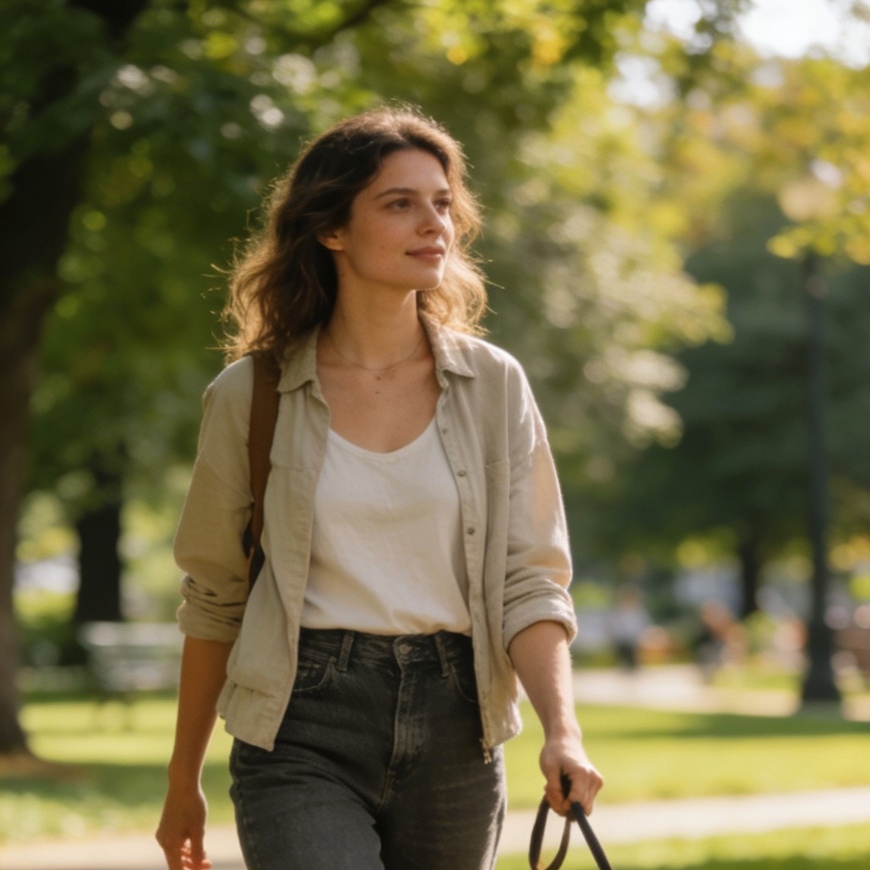
Artificial intelligence has fundamentally altered the landscape of visual storytelling. Today, the ability to transform a fleeting thought into a high-fidelity image is no longer reserved for those with years of formal training in painting or digital design. By leveraging sophisticated neural networks, anyone can collaborate with an algorithm to produce stunning visuals. This process, often referred to as text-to-image generation, is an iterative cycle of communication between human intent and machine execution. To succeed, one must understand not just which buttons to click, but how to speak the language of the AI and navigate the expanding ecosystem of creative tools.
Selecting the Right AI Image Generator for Your Specific Needs
The market for AI image generators has matured rapidly, moving from experimental prototypes to specialized platforms tailored for different creative goals. Choosing the right tool is the first and most critical decision in your creative journey.
Midjourney for Artistic Excellence and Realism
For those seeking the highest aesthetic quality, Midjourney remains a dominant force. Operating primarily through a Discord interface (and more recently a dedicated web portal), it is renowned for its "vibe"—a unique ability to interpret prompts with a high degree of artistic flair.
In professional tests, Midjourney v6 has shown exceptional performance in capturing complex textures, such as the translucency of human skin or the intricate reflections on metallic surfaces. It excels in photography and digital painting styles. However, it requires a learning curve regarding its specific parameters. For instance, using the --ar 16:9 suffix is essential for cinematic wide shots, while adjusting the --stylize (or --s) parameter allows you to control how much "creative liberty" the AI takes with your prompt. A lower stylize value keeps the result closer to your literal text, while a higher value produces more imaginative, albeit sometimes unexpected, results.
DALL-E 3 for Seamless Integration and Logical Understanding
Developed by OpenAI and integrated into ChatGPT, DALL-E 3 is perhaps the most accessible tool for beginners. Its greatest strength lies in its ability to understand complex, conversational instructions. Unlike other models that may ignore parts of a long prompt, DALL-E 3 follows logical constraints with high fidelity.
If you ask for "a red apple on the left of a blue bowl, with a small green worm peeking out," DALL-E 3 is more likely than its competitors to place the objects in the exact spatial arrangement you requested. Furthermore, because it is baked into ChatGPT, you can iterate on images by simply chatting. You can say, "Make the lighting more dramatic," and the system will rewrite the underlying prompt to achieve that effect. This makes it an excellent choice for rapid brainstorming and conceptual work.
Adobe Firefly for Commercial Safety and Designer Workflows
Adobe Firefly takes a different approach by focusing on "commercial safety." While many AI models are trained on vast datasets of web-scraped images—leading to legal grey areas—Firefly is trained primarily on Adobe Stock’s library and public domain content. This makes it the preferred choice for corporate environments where copyright infringement is a significant risk.
Beyond safety, Firefly is integrated directly into Adobe Photoshop and Illustrator. Features like "Generative Fill" allow designers to select a portion of an existing photo and let the AI fill it in based on the context of the rest of the image. This bridge between traditional editing and AI generation creates a powerful hybrid workflow that saves hours of tedious manual cloning and masking.
Flux and Stable Diffusion for Open Source Flexibility
For power users who want total control, open-source models like Stable Diffusion and the newer Flux.1 have become industry favorites. These models can be run locally on powerful hardware (typically requiring at least 12GB to 24GB of VRAM) or through specialized cloud providers.
Flux.1, in particular, has recently gained traction for its incredible ability to render human hands and legible text—two areas where AI has historically struggled. Because these models are open-source, the community has built thousands of "LoRAs" (Low-Rank Adaptations). These are mini-models you can layer on top of the base AI to achieve very specific styles, such as 1990s anime, architectural blueprints, or specific fashion photography aesthetics.
Mastering the Language of AI Through Prompt Engineering
Once you have chosen your tool, the quality of your output depends entirely on your "prompt." Think of a prompt not as a search query, but as a creative brief given to a world-class artist who has no context of your thoughts.
The Core Formula of an Effective Image Prompt
A vague prompt yields a generic result. To get professional-grade images, you should follow a structured formula. A highly effective prompt structure generally looks like this:
[Subject] + [Action/Pose] + [Environment/Setting] + [Style/Medium] + [Lighting/Mood] + [Composition/Camera Tech]
For example, compare "a cat" with the following: "A fluffy Maine Coon cat (Subject) lounging majestically on a velvet Victorian armchair (Action/Setting) in a sun-drenched library (Environment). The style is a high-detail oil painting with thick impasto brushstrokes (Style). Soft, golden hour light filtering through dust motes (Lighting), 8k resolution, cinematic composition (Technical)."
The latter provides the AI with enough anchors to reconstruct a specific, cohesive scene rather than pulling from a random average of every cat image in its database.
Using Descriptive Adjectives to Define Texture and Mood
The AI "thinks" in tokens—numerical representations of concepts. Adjectives act as weights that steer the generation toward specific clusters of data. If you want a futuristic look, don't just use the word "futuristic." Use words that imply the materials of the future: "iridescent polycarbonate," "brushed titanium," "holographic interfaces," or "neon-lit cyan accents."
Similarly, for mood, words like "melancholic," "ethereal," "gritty," or "vibrant" carry significant weight. In my experience, combining contradictory adjectives can sometimes lead to the most creative breakthroughs, such as "brutalist cozy" or "cyberpunk pastoral."
Defining Technical Parameters and Camera Angles
To make an AI image look like a professional photograph, you must speak the language of photography. The AI models have been trained on millions of photos that include metadata about the lenses and settings used.
- Macro Shot: Use this for extreme close-ups of insects, flowers, or textures. It forces the AI to create a shallow depth of field.
- Wide Angle / 24mm Lens: Use this for sprawling landscapes or architecture to give a sense of scale.
- Low Angle: This makes the subject appear powerful and heroic.
- Depth of Field / Bokeh: Specifying "f/1.8 aperture" or "blurred background" will help separate the subject from the environment, creating a professional look.
Advanced Techniques for Refining and Editing AI Outputs
Generating the initial image is rarely the final step. Professional AI workflows involve several layers of refinement to move from "decent" to "perfect."
Utilizing Inpainting to Fix Local Details
Inpainting is a feature where you mask out a specific part of a generated image and ask the AI to regenerate only that area. This is essential for fixing common AI errors, such as a person having six fingers or a distorted face in a background crowd.
In a professional setting, you might generate a perfect landscape but find the character's clothing isn't right. Instead of regenerating the whole image and losing the beautiful mountains, you would use inpainting to "brush over" the clothes and prompt for "a red silk gown" or "tactical obsidian armor."
Outpainting and Canvas Expansion for Better Composition
Sometimes you generate a perfect portrait, but the framing is too tight. Outpainting (or Generative Expand) allows the AI to "imagine" what exists beyond the current borders of the image. By analyzing the textures, lighting, and colors of the original, the AI can extend the floor, sky, or background elements seamlessly. This is particularly useful for turning square social media posts into wide headers for websites or cinematic posters.
The Power of Negative Prompts and Seed Control
While positive prompts tell the AI what to include, "Negative Prompts" tell it what to avoid. If you find your images are consistently too blurry or have a specific color you dislike, you can add tags like --no blur, distorted, green (in Midjourney) or enter them into a dedicated negative prompt box in Stable Diffusion. Common negative prompts used by pros include "low resolution, watermark, text, blurry, deformed limbs."
"Seed Control" is another advanced concept. Every AI image starts as a block of random noise, and the "seed" is the starting number for that noise. If you find an image you almost love, you can use its seed number in your next prompt. This ensures the basic composition and "bones" of the image stay the same while you tweak minor words in the prompt.
Understanding the Science Behind Diffusion Models
To truly master the craft, it helps to understand what is happening under the hood. Most modern AI image generators (DALL-E 3, Midjourney, Stable Diffusion, Flux) use a process called Latent Diffusion.
Unlike early AI (GANs) which tried to "imagine" an image all at once, Diffusion models work through a process of denoising.
- Forward Diffusion: During training, the AI takes a clear image and gradually adds "Gaussian noise" (static) until the image is unrecognizable.
- Reverse Diffusion: The AI is trained to reverse this process. It looks at a block of static and tries to predict what the original image looked like based on the text prompt provided.
- The Generation Phase: When you enter a prompt, the AI starts with a completely random block of static. Guided by your text, it removes "noise" over 20 to 50 steps. In each step, it asks: "Based on the prompt 'a beach,' which part of this static looks most like sand?" It gradually refines those pixels until a clear, high-resolution image emerges.
This is why images often look blurry or abstract in the first few seconds of generation and suddenly "snap" into focus at the end. Understanding this helps you realize that the AI isn't "finding" an image; it is constructing a statistical probability of what your words should look like.
Ethical Considerations and Copyright in the Age of AI Art
As we embrace these tools, we must address the ethical and legal complexities they introduce. Creating AI images is a powerful capability, but it comes with responsibilities.
- Transparency: In journalistic or professional contexts, it is best practice to disclose when an image is AI-generated. This maintains trust and prevents the spread of misinformation (deepfakes).
- Copyright Ownership: Currently, in many jurisdictions (including the US), AI-generated images without significant human intervention cannot be copyrighted. This means that while you can use them, you might not have exclusive legal rights to stop others from using them. Check the terms of service of your specific tool (e.g., Midjourney Pro vs. Free) for commercial usage rights.
- Artist Styles: There is ongoing debate about using the names of living artists in prompts (e.g., "in the style of [Living Artist]"). Many ethical users choose to describe the elements of a style (e.g., "vibrant surrealism, thick textures") rather than using a specific artist's name to respect their intellectual property.
- Bias and Representation: AI models are trained on the internet, which contains inherent biases. If you prompt for "a doctor," the AI might disproportionately return images of a specific gender or ethnicity. Proactive prompting—specifying diversity and inclusion—is often necessary to overcome these algorithmic biases.
Summary of Best Practices for AI Image Creation
Creating exceptional AI imagery is a blend of technical knowledge and creative intuition. To summarize the most effective path forward:
- Match the tool to the task: Use Midjourney for aesthetics, DALL-E 3 for logic, and Firefly for commercial safety.
- Be hyper-specific: Follow a structured prompt formula including subject, style, lighting, and technical camera settings.
- Iterate, don't just regenerate: Use inpainting and outpainting to refine a "good" image into a "great" one rather than starting from scratch every time.
- Learn the jargon: Familiarize yourself with photography terms like "bokeh," "depth of field," and "wide angle" to communicate more effectively with the model.
- Stay ethical: Disclose AI use when necessary and be mindful of copyright and bias.
Frequently Asked Questions About Creating AI Images
What is the best free AI image generator?
Bing Image Creator (powered by DALL-E 3) and Canva’s Magic Media are currently the most powerful free options for beginners. They offer a user-friendly interface and high-quality results without requiring a subscription.
Why do AI-generated images often have weird hands or too many fingers?
This occurs because AI doesn't understand the "anatomy" or "logic" of a hand; it only understands the statistical patterns of how skin and fingers look in photos. Since hands are often folded, tucked, or holding objects in training data, the AI gets confused about the count. Modern models like Flux.1 and Midjourney v6 have significantly improved this.
Can I sell the images I create with AI?
It depends on the platform's terms. Midjourney and DALL-E 3 generally grant commercial rights to paid subscribers. However, remember that you may not be able to "copyright" the image in the traditional sense, meaning someone else could technically use it as well.
How do I make my AI images look more realistic?
Use technical keywords like "shot on 35mm film," "f/2.8 aperture," "raw photo," and "high dynamic range (HDR)." Avoid words like "photorealistic," which can sometimes trigger the AI to make things look too perfect and plastic-like.
Is prompt engineering a real skill?
Yes. Just as a photographer must master lighting and composition, an AI artist must master the nuance of language, weights, and parameters to achieve consistent, high-quality results. The ability to translate a complex vision into a precise set of instructions is the core skill of the modern digital creator.
By following this roadmap, you can harness the power of artificial intelligence to elevate your creative output, whether you are building a brand, illustrating a story, or simply exploring the limits of your imagination.
-
Topic: Overview of Image Generationhttps://content-media-cdn.codefinity.com/pdf/ef049f7b-ce21-45be-a9f2-5103360b0655/computer_vision_essentials_advanced_topics_overview_overview_of_image_generation_en.pdf
-
Topic: Quickstart: Generate images with Azure OpenAI in Azure AI Foundry Models - Azure OpenAI | Microsoft Learnhttps://learn.microsoft.com/en-us/azure/ai-services/openai/dall-e-quickstart
-
Topic: Create images with generative AIhttps://helpx.adobe.com/si/express/web/create-and-edit-images/create-and-modify-with-generative-ai/text-to-image.html