Home
Why Double Diffusion Is the Best Choice for Professional Portraits
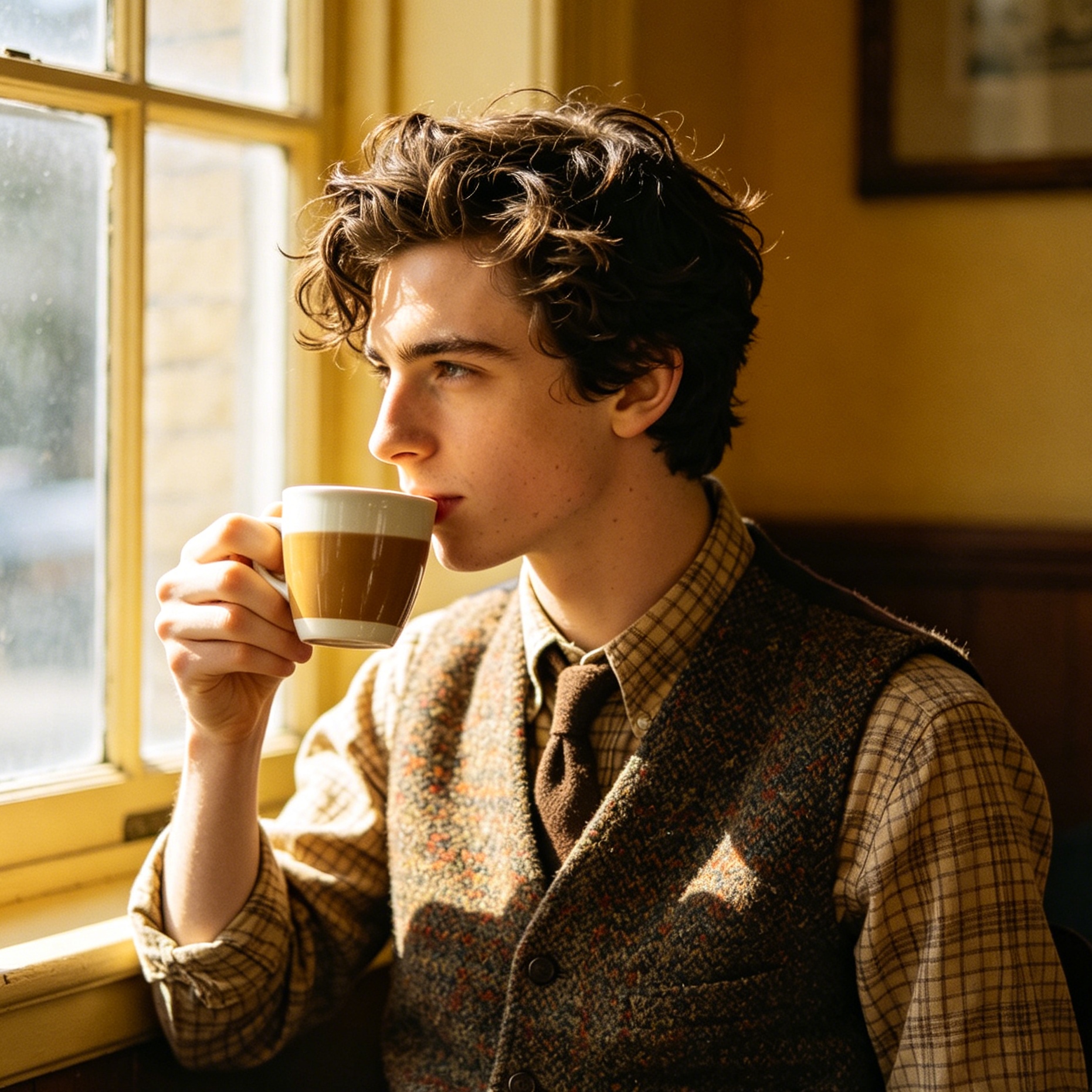
The difference between an amateur-looking portrait and a professional one often boils down to how light is managed. When you unbox a new softbox, you typically find two white fabric panels: an inner baffle and an outer diffuser. The question of when to use both layers on a softbox for portraits is a fundamental one for any photographer seeking to master their craft.
In professional portraiture, you should use both layers of diffusion whenever your primary goal is the highest quality of light, characterized by extreme softness and the elimination of harsh "hot spots." While this configuration reduces total light output, the trade-off in light quality is almost always worth it for flattering skin tones and smooth transitions.
Understanding the Mechanics of the Two Layers
To understand why using both layers is standard practice in high-end studios, we must first break down what each layer actually does from a physics perspective.
The Inner Baffle: Managing the "Hot Spot"
The inner baffle is the smaller piece of fabric that clips or Velcros inside the softbox, positioned between the light source and the outer shell. Its primary function is to break up the "hot spot."
When a strobe fires, the light is most intense at the center of the bulb. Without an inner baffle, the light hits the outer diffusion fabric with a concentrated burst of energy in the middle. This results in a lighting pattern that is bright in the center and falls off quickly toward the edges of the softbox. In a portrait, this "hot spot" translates to harsh, oily-looking highlights on the subject’s forehead, nose, and cheekbones. The inner baffle forces the light to scatter inside the box first, distributing it more evenly toward the edges of the softbox frame.
The Outer Diffuser: Creating the Light Source
The outer diffuser is the final gatekeeper. Once the inner baffle has evened out the intensity, the outer layer acts as the actual "source" of light that the subject sees. By filling the entire front surface area of the softbox with light, you effectively turn a small, harsh bulb into a massive, glowing window. The larger the apparent light source relative to the subject, the softer the shadows will be.
When to Use Both Layers for Portraits
For the majority of portrait photography scenarios, keeping both layers installed is the recommended default. Here is why this configuration is essential for specific styles:
1. Beauty and High-End Fashion Photography
In beauty photography, where the skin is the star of the show, any unevenness in light can accentuate pores, fine lines, or blemishes. Using both layers creates a "homogenous" light source. In our tests, we found that double diffusion creates a much more gradual transition from light to shadow (the "feathering" of the shadow edge), which fills in skin texture and provides that sought-after "creamy" look.
2. Corporate Headshots and Professional Branding
Professional headshots require a clean, approachable look. You want the catchlights in the eyes to look natural and uniform. If you use only one layer, the catchlight in the subject’s eye will often reveal a bright dot in the center of the softbox. By using both layers, the catchlight becomes a beautiful, solid shape (like a square or an octagon), which looks much more like natural window light and less like artificial studio equipment.
3. Portraits with Reflective Subjects
If your subject is wearing glasses, heavy jewelry, or has naturally oily skin, they are highly reflective. Single-layer diffusion often produces "specular highlights" that are blown out (pure white with no detail). Double diffusion lowers the "specular peak" of the light, ensuring that you maintain detail in the highlights, making post-processing and color grading significantly easier.
The Cost of Quality: Understanding Light Loss
While double diffusion is superior for light quality, it comes at a technical cost: power. Every layer of fabric the light passes through absorbs and scatters some of that energy.
- The Exposure Hit: In a typical setup with a standard Bowens-mount strobe, adding the second layer of diffusion usually results in a loss of about 0.8 to 1.2 stops of light.
- The Power Requirement: If you are shooting at f/8 for a group portrait and your strobe is only 200Ws, you might find that you don't have enough power to get a proper exposure with both layers on. This is where you have to make a decision: do you sacrifice the quality of light for the quantity of light?
In professional environments, we solve this by using more powerful strobes (600Ws or higher). This allows us to keep the double diffusion while still maintaining a low ISO and a narrow aperture for sharpness.
When You Should Consider Removing One Layer
There are specific, albeit rarer, occasions where removing the inner or outer layer is a calculated choice rather than a mistake.
1. Seeking More "Character" and Contrast
If you find that your portraits look too "flat" or "mushy," you might want more "bite" in your light. Removing the inner baffle allows that central hot spot to reappear. This creates a more directional light that can emphasize bone structure and muscle definition. This is popular in "gritty" athletic portraits or character studies where you want the shadows to be deeper and the highlights to be punchier.
2. Working with Low-Power LED Lights
If you are using a continuous LED light for video or hybrid shooting, and that light isn't particularly powerful, using both layers might drop your exposure so much that you have to crank your ISO to 3200 or higher, introducing noise. Many modern COB LEDs (like the Aputure or Godox series) have built-in diffusers or recessed designs that help minimize hot spots. In these cases, you might get away with just the outer layer to keep your ISO low.
3. Simulating Sunlight
Softboxes are generally used to simulate window light. However, if you are trying to simulate "hard" sunlight filtered through a thin cloud, using only the inner baffle or a single outer layer can provide that slightly sharper shadow edge that mimics the sun's natural characteristics better than a perfectly soft, double-diffused source.
How to Test Your Softbox for Hot Spots
As a chief product manager for SEO content and a veteran in the field, I always recommend "visual verification" over theory. You can check your softbox's performance in two minutes:
- The Dimmer Test: Turn on your light’s modeling lamp (the continuous bulb) and turn it down to its lowest setting. Look directly at the front of the softbox. Do you see a bright, intense circle in the center? That is a hot spot. If the entire front panel glows with the same intensity from edge to edge, your diffusion is working perfectly.
- The Shadow Test: Hold a pen or a finger about six inches away from a white wall and light it with your softbox. Look at the shadow. Is the edge of the shadow blurry and soft, or is it relatively sharp? Double diffusion will significantly blur that shadow edge.
- The Catchlight Check: Take a photo of a glass marble or any reflective sphere. Zoom in on the reflection. If you see a bright "ping" in the center of the softbox reflection, you need the inner baffle.
Impact of Softbox Shape on Double Diffusion
The shape of your softbox (Octagon, Square, or Strip) interacts with the diffusion layers in different ways.
- Octaboxes: These are the gold standard for portraits because they create round catchlights. Using both layers is critical here because an Octabox is designed to wrap light around the face. A hot spot in an Octabox defeats the purpose of its "wrap-around" design.
- Strip Boxes: These are narrow and often used for rim lighting or hair lighting. Because they are so narrow, the inner baffle is sometimes omitted to get more "reach" and a harder edge to separate the subject from the background. However, for a soft "kick" on the cheek, double diffusion is still preferred.
- Square Softboxes: Often used to mimic windows. Double diffusion ensures that the "window" looks like it has a sheer curtain over it, providing perfectly even light across the subject.
Advanced Setup: Combining Grids with Double Diffusion
Many photographers ask if they should use a grid (egg crate) while also using both layers of diffusion. The answer is yes, but for a different reason.
While the diffusion layers control the quality (softness) of the light, the grid controls the direction (spill) of the light. If you are shooting in a small room with white walls, your soft, double-diffused light will bounce everywhere, washing out your shadows. By adding a grid on top of your two layers of diffusion:
- The light remains incredibly soft on the subject's skin.
- The light is prevented from hitting the side walls and the background.
- You maintain "drama" and contrast while still having "soft" light.
This is the "pro's secret" for high-impact portraits in small spaces.
Troubleshooting Common Issues
"My light is still too harsh even with both layers."
If you have both layers installed but the light still feels "hard," check your distance. A softbox only creates soft light if it is large relative to the subject. If your softbox is 10 feet away, it behaves like a small light source. Move it closer—about 2 to 3 feet from the subject's face. This maximizes the effect of the double diffusion.
"My images are coming out yellow or blue."
The fabric used in cheap softboxes can sometimes "yellow" over time or have a slight blue tint. If you use two layers of low-quality fabric, this color shift is doubled. Always perform a custom white balance with your softbox layers on to ensure your skin tones remain accurate.
"The inner baffle is sagging."
If the inner baffle isn't taut, it won't scatter light evenly. Ensure the elastic or Velcro is tight. If it sags, it can create an uneven "blob" of light that is even worse than a hot spot.
Practical Tips for the Field
- Label Your Baffles: If you own multiple softboxes, the inner baffles often look identical but have different dimensions. Label them with a Sharpie on the corner (e.g., "36-inch Octa") so you don't waste time on set trying to fit a square peg in a round hole.
- Wash Your Diffusers: Over time, diffusion fabric collects dust and skin oils if you're working in tight spaces. This can lead to "dingy" light. Hand-wash them in cold water with a mild detergent once a year to keep your light "clean."
- Carry Spares: Diffusion fabric is thin. It can rip or get scorched if it touches a hot modeling lamp. Always have a spare set or a roll of diffusion paper (like Lee 216) as a backup.
Summary
In the world of portrait photography, the "look" of the light defines the brand. Using both layers on a softbox—the inner baffle and the outer diffuser—is the most reliable way to achieve a professional, commercial-grade light quality. This configuration eliminates distracting hot spots, smooths out skin texture, and provides beautiful, natural catchlights in the eyes.
While you will lose approximately one stop of light power, the benefits to the final image far outweigh the need for a slightly more powerful strobe. Reserved for those moments when you need raw power or specific high-contrast character, the single-layer approach is the exception, while the double-layer approach is the rule.
FAQ
Does using both layers change the color temperature?
Yes, it can. Most diffusion fabrics have a slight warming or cooling effect. Passing through two layers doubles this effect. It is essential to use a gray card to set your white balance after you have decided on your diffusion setup.
Can I use double diffusion with a speedlight?
Yes, but be careful. Speedlights are much less powerful than studio strobes. Using two layers of diffusion on a medium-sized softbox might require your speedlight to fire at 1/1 or 1/2 power, which will lead to long recycle times and fast battery drain.
What if my softbox only came with one layer?
Some "pop-up" style softboxes for speedlights only come with one layer. You can "DIY" a second layer by hanging a piece of translucent white ripstop nylon or even a thin white bedsheet inside the box before putting on the final cover.
Does the distance between the two layers matter?
Yes. The more space there is between the inner baffle and the outer diffuser, the more time the light has to scatter and become even. This is why deeper softboxes (parabolic) often provide a slightly better quality of light than very shallow "pancake" style softboxes.
Should I remove the layers for product photography?
It depends on the product. For a matte product, double diffusion is great. For a shiny product like a watch or a wine bottle, you might want to remove the front diffusion and use the softbox to light a large sheet of "scrim" (professional diffusion paper) to create a perfect gradient reflection.
How do I know if I have enough power for both layers?
Take a test shot at ISO 100, f/8. If your flash is at full power and the image is still dark, you have three choices: increase your ISO, open your aperture (e.g., to f/4), or remove the inner baffle to gain that extra stop of light.
Is double diffusion necessary for outdoor portraits?
If you are using a softbox outdoors to compete with the sun, power is your biggest challenge. In high-speed sync (HSS) mode, your flash power drops significantly. In this specific case, photographers often remove the inner baffle to maximize light output so they can actually see the flash's effect against the bright sun.
-
Topic: Softbox Lighting Guide: Master Portrait Light Setuphttps://www.smallrig.com/blog/how-to-position-softbox-portrait-lighting.html
-
Topic: Softbox Lighting Q& A: Sizes, Shapes, Distance, and Diffusion Demystifihttps://www.harlowe.com/blogs/blogs/softbox-lighting-guide
-
Topic: Finding the Perfect Softbox for Your Photography – Cheetah Standhttps://cheetahstand.com/blogs/news/finding-the-perfect-softbox-for-your-photography