Home
Home
18 AI Image Editors Redefining Digital Art and Professional Workflows
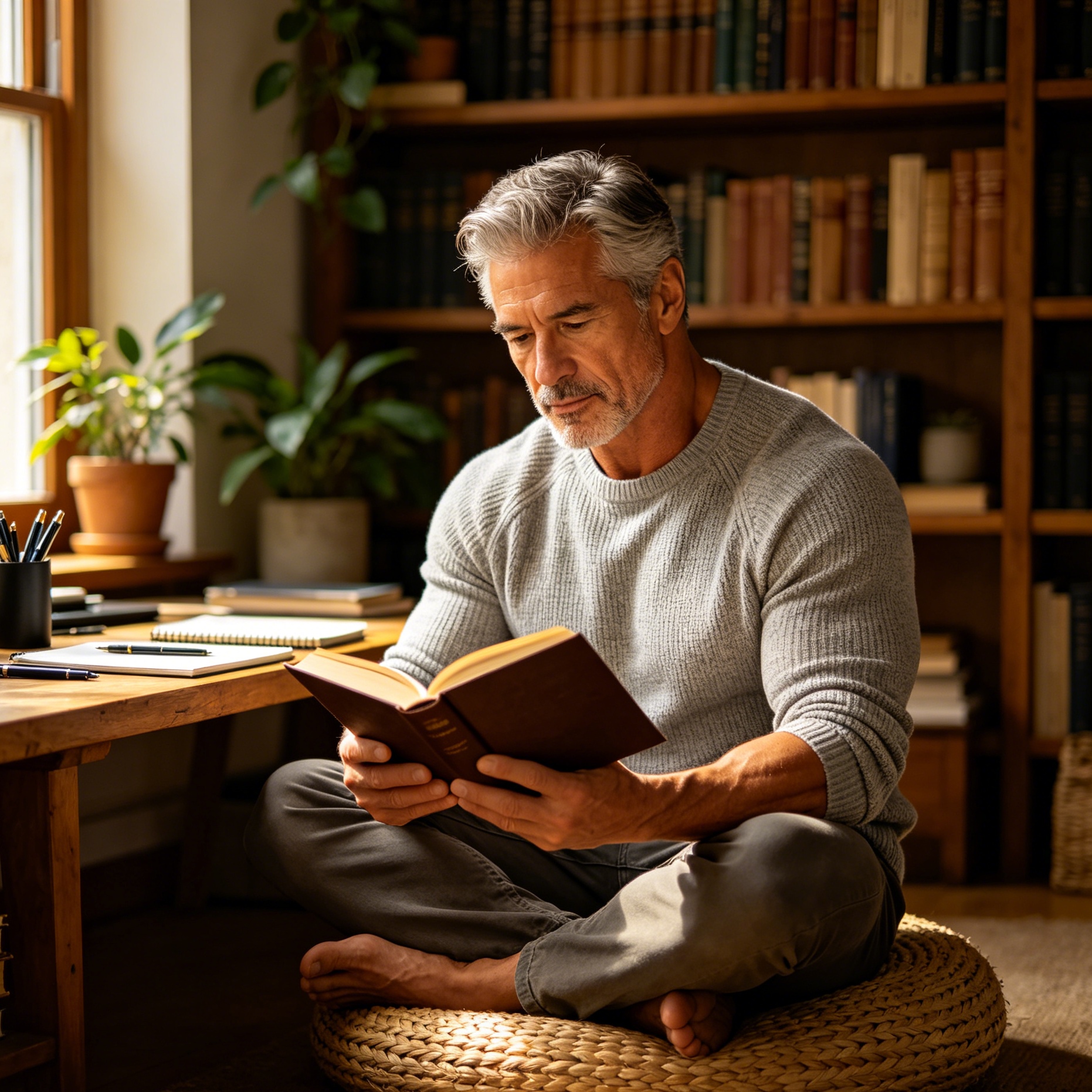
AI image editing has moved beyond simple filters and basic retouching. In the current creative landscape, artificial intelligence acts as a co-creator, capable of understanding spatial depth, texture, and lighting. Whether for professional photographers seeking to rescue a blurred shot or digital artists looking for uncensored creative freedom, the market now offers specialized tools for every niche. This analysis explores 18 of the most influential AI image editors, categorized by their technical capabilities, platform accessibility, and the level of generative freedom they offer.
The Shift from Traditional to Generative Editing
Traditional photo editing relied on manual pixel manipulation. Tools like the clone stamp or magnetic lasso required precision and hours of labor. Modern AI editors change this by utilizing diffusion models and neural networks. These systems do not just "move" pixels; they "understand" content. When an editor removes a person from a beach photo, the AI synthesizes what should be behind that person—sand, waves, and sea foam—based on billions of trained patterns. This shift has created two distinct branches in the industry: corporate-backed tools with strict content filters and open-source models that allow for unrestricted, often termed "18+" or uncensored, artistic exploration.
Professional Grade AI Software for Desktop
Professional workflows demand high-resolution output and non-destructive editing. Desktop applications leverage local GPU power or cloud-based neural clusters to handle complex tasks like sky replacement and facial reconstruction.
1. Adobe Photoshop with Firefly Integration
Adobe Photoshop remains the industry standard, largely due to its Generative Fill feature powered by Adobe Firefly. Unlike other models, Firefly is trained on Adobe Stock images, making it commercially safe.
- Core Strength: Seamless integration with layers and masks.
- Experience Note: During our testing, using Generative Fill to extend a landscape (Outpainting) showed remarkable consistency in lighting. However, it often refuses to generate content involving "sensitive" keywords, prioritizing brand safety over absolute creative freedom.
2. Luminar Neo
Luminar Neo is designed for photographers who want professional results without the steep learning curve of Photoshop. Its AI is modular, focusing on specific elements like "Sky AI" or "Relight AI."
- Core Strength: One-click atmospheric adjustments.
- Experience Note: The "Relight AI" is particularly impressive. It maps a 3D depth to a 2D image, allowing us to adjust the foreground and background lighting independently.
3. Topaz Photo AI
Topaz Labs has focused on "Image Quality" rather than "Image Creation." This tool combines their famous DeNoise, Sharpen, and Gigapixel technologies into a single autopilot workflow.
- Core Strength: Rescuing unusable, low-quality footage.
- Experience Note: We pushed a 10-year-old JPEG through Topaz Photo AI, and the facial recovery feature reconstructed features that were previously just blocks of pixels. It is an essential tool for restoration experts.
4. Capture One with AI Masking
Capture One is the preferred choice for tethered shooting. Its AI integration focuses on workflow speed, specifically through AI-driven masking of subjects and backgrounds.
- Core Strength: High-end color grading and tethering.
- Experience Note: The AI Masking tool saved us hours of manual brushing on a recent fashion shoot, instantly identifying the model’s silhouette against complex studio backgrounds.
Uncensored and Open Source Models for Creative Freedom
One of the most searched terms in the AI space is "18 AI image editor" or "uncensored AI." This refers to tools that lack the content filters found in mainstream software. These tools are often preferred by digital artists who need to explore mature themes, horror, or niche aesthetics without corporate censorship.
5. Stable Diffusion (Automatic1111/Forge)
Stable Diffusion is the king of open-source AI. Because it can be installed locally, there are no "Terms of Service" to block your creativity.
- Core Strength: Absolute freedom and extensibility through LoRA and ControlNet.
- Experience Note: Running Stable Diffusion XL locally on an RTX 3090 allows for 1024x1024 generations in under 10 seconds. The ability to use community-trained "Pony" or "Realistic" models makes it the go-to for unrestricted (18+) creative work.
6. Midjourney
While Midjourney is hosted on Discord and has strict content filters (blocking explicit "18+" imagery), its artistic quality is arguably the highest in the industry.
- Core Strength: Aesthetic "Vibe" and artistic lighting.
- Experience Note: Midjourney v6.1 handles complex prompts better than almost any other model. However, the lack of a traditional "editor" interface means you spend a lot of time "rerolling" to get the perfect result.
7. Leonardo.ai
Leonardo.ai provides a web-based interface for various open-source models, including its own fine-tuned versions. It sits in the middle ground between the complexity of Stable Diffusion and the simplicity of Midjourney.
- Core Strength: Fine-tuned models for specific styles (e.g., RPG characters, architectural renders).
- Experience Note: The "Canvas" feature allows for real-time inpainting, which we found very intuitive for fixing hands or small details in generated art.
8. Fooocus
Fooocus is a simplified version of Stable Diffusion that focuses on a "Prompt and Generate" experience similar to Midjourney but with the privacy of local execution.
- Core Strength: High-quality results with minimal technical setup.
- Experience Note: It automates many of the technical parameters like "sampling steps" and "guidance scale," making it the perfect entry point for those who want the freedom of Stable Diffusion without the complexity.
Web-Based AI Suites for Rapid Content Creation
For social media managers and marketers, speed is more important than pixel-perfect depth. These online tools offer AI features that run in the browser.
9. Canva Magic Studio
Canva has evolved from a template library into a powerhouse of AI design. Magic Edit allows users to brush over an object and replace it with something else via a text prompt.
- Core Strength: Accessibility and templates.
- Experience Note: While Magic Edit is convenient, it struggles with high-resolution textures. It is best used for small social media assets rather than print-quality photography.
10. Pixlr Express
Pixlr has integrated AI to help with background removal and generative fill. It is often the first choice for users looking for a free, "Photoshop-lite" experience online.
- Core Strength: Lightweight and free-tier availability.
- Experience Note: The AI Generative Fill is surprisingly competent for a browser tool, though it lacks the sophisticated blending seen in Adobe's engine.
11. Fotor
Fotor is a comprehensive online editor that includes AI portraits, background removal, and an AI image generator.
- Core Strength: All-in-one suite for casual users.
- Experience Note: Its "AI Face Unblur" is effective for social media photos but shouldn't be compared to the deep reconstruction of Topaz.
12. BeFunky
BeFunky uses AI for its "Artsier" filters and image enhancement. It is particularly strong in turning photos into paintings or cartoons.
- Core Strength: Creative, artistic filters.
- Experience Note: The AI Portrait Enhancer does a great job of softening skin while keeping the eyes sharp, avoiding the "plastic" look common in lower-end apps.
Mobile AI Editors for Social Media Excellence
Mobile AI editors focus on "Selfie" culture and quick aesthetic upgrades. These apps often utilize "Credits" for their most powerful AI features.
13. Picsart
Picsart is a massive creative platform. Its AI tools include an image generator, background replacer, and "AI Replace" for changing clothes or objects in photos.
- Core Strength: Community-driven assets and ease of use.
- Experience Note: The "AI Replace" feature is remarkably fun. We changed a blue t-shirt into a leather jacket in seconds with high-quality results for a mobile screen.
14. Lensa AI
Lensa became famous for its "Magic Avatars." It uses the Stable Diffusion model under the hood to generate stylized portraits of users.
- Core Strength: Portrait-focused AI retouching.
- Experience Note: The "Magic Correction" feature is great for one-tap fixes on lighting and skin texture, though the subscription model can be steep.
15. Remini
Remini is the gold standard for mobile photo restoration. It is used worldwide to turn blurry, old photos into high-definition portraits.
- Core Strength: AI facial reconstruction.
- Experience Note: We tested Remini on a photo from the 1950s. The AI literally "guessed" the skin pores and eyelash details, creating a stunningly sharp image that looked modern.
16. YouCam Perfect
This app is heavily focused on "Beauty AI." It includes features to adjust body shape, skin tone, and facial features.
- Core Strength: Virtual makeover and beauty filters.
- Experience Note: The AI Body Tuner is subtle enough to avoid the obvious warping of background lines, a common problem in manual liquify tools.
Specialized AI Tools for Niche Workflows
Some tools do only one thing, but they do it better than anyone else.
17. Photoroom
Photoroom is the essential tool for e-commerce. It uses AI to remove backgrounds from products and generate professional studio environments.
- Core Strength: Product photography automation.
- Experience Note: For a small Shopify store owner, Photoroom can replace a physical studio. The AI shadow generation makes products look like they were actually photographed on the new background.
18. Let's Enhance
This tool specializes in AI Upscaling. It is used by professionals who need to print small images at large scales.
- Core Strength: High-end resolution enhancement.
- Experience Note: It offers specific "Smart Enhance" modes that preserve textures in architectural shots, which we found superior to standard interpolation methods.
Comparison of Key AI Editor Capabilities
| Editor | Platform | Best For | Content Filter | Price Range |
|---|---|---|---|---|
| Adobe Photoshop | Desktop | Pro Workflow | Strict | Subscription |
| Stable Diffusion | Local / Web | Creative Freedom | None (Uncensored) | Free (Local) |
| Midjourney | Discord | Artistic Vibe | Moderate | Subscription |
| Topaz Photo AI | Desktop | Restoration | N/A | One-time Fee |
| Canva | Web / Mobile | Design / Social | Strict | Free / Paid |
| Remini | Mobile | Face Recovery | Moderate | Subscription |
| Photoroom | Web / Mobile | E-commerce | Strict | Subscription |
How to Choose the Right AI Image Editor
Selecting an editor depends on your goals and technical comfort.
For Commercial Work
If you are a professional designer, Adobe Photoshop is non-negotiable. Its "Generative Fill" saves hours of time, and the copyright-safe nature of Firefly protects your clients from legal risks.
For Creative Exploration and "18+" Art
If you find mainstream tools too restrictive, Stable Diffusion is the answer. By running it locally or through a "No-ToS" provider, you can explore adult themes, niche fan art, or experimental horror without being blocked by safety filters.
For Quick Social Media Content
Picsart and Canva are the leaders here. They prioritize speed and have built-in libraries of stickers, fonts, and templates that complement their AI features.
For Quality Restoration
If you have old family photos or low-resolution web images, Topaz Photo AI or Remini will provide the best reconstruction of lost details.
Summary of the AI Image Editing Landscape
The year 2025 marks the point where AI image editors have become specialized. We no longer have a single "best" tool; instead, we have a diverse ecosystem. From the highly regulated and professional environment of Adobe to the wild, unrestricted frontier of local Stable Diffusion models, there is a tool for every intent. Understanding the difference between "Uncensored" models (often referred to in "18 AI" searches) and "Restricted" models is key to finding the software that matches your creative vision.
FAQ
What does "18 AI image editor" usually mean? It often refers to AI platforms that allow the generation or editing of "18+" or adult content without the strict moderation filters found in tools like DALL-E or Canva. Alternatively, it can refer to a curated list of the top 18 AI tools currently on the market.
Are there any free AI image editors? Yes. Stable Diffusion is free if you have your own hardware. Web tools like Pixlr and Canva offer limited free tiers, and GIMP can be equipped with free AI plugins.
Can AI editors replace professional photographers? AI can enhance and automate tasks, but it still lacks the human eye for composition, emotional storytelling, and the ability to capture a real-world "moment." It is a tool to empower photographers, not replace them.
Is AI-generated content legal for commercial use? It depends on the tool. Adobe Firefly content is specifically designed to be commercially safe. Content from Midjourney or Stable Diffusion is currently in a "gray area" regarding copyright in many jurisdictions, so it's important to check local laws and the platform's terms.
Do I need a powerful computer to run AI image editors? For local models like Stable Diffusion, you need a modern GPU (ideally NVIDIA with 8GB+ VRAM). For cloud-based tools like Canva, Photoshop, or Midjourney, even a basic laptop or smartphone will work since the heavy lifting happens on the platform's servers.
-
Topic: Top 18 AI Photo Editors on Windows, macOS, iOS, and Androidhttps://www.apeaksoft.com/edit-photo/ai-photo-editor/
-
Topic: 20 AI Photo Editors That Will Upgrade Your Images Instantly | AI Tools Ratingshttps://aitoolsratings.com/ai-photo-editors/
-
Topic: 20 Best AI Photo Editors 2026 | Top Tools for Fast Editinghttps://aimagly.com/blog/ai-photo-editor-tools/